Welcome to the Department of Physical Geography
In an era where climate change, environmental hazards, and the dynamic processes of the Earth’s surface have become the foremost challenges facing humanity, the Department of Physical Geography at the University of Sistan and Baluchestan, as a scientific hub in eastern Iran, is committed to understanding, analyzing, and managing these complex phenomena. Our mission is to cultivate a new generation of specialists who, by mastering the disciplines of geomorphology and climatology and leveraging modern technologies such as Remote Sensing (RS), Geographic Information Systems (GIS), and advanced modeling, are capable of delivering scientific solutions to the critical issues facing Iran today and tomorrow. From the management of water and soil resources and the analysis of hazards like floods and droughts to sustainable land use planning and unraveling the mechanisms of climate change, we stand at the forefront of research and education to build a resilient and harmonious future with nature.
Message from the Head of the Department
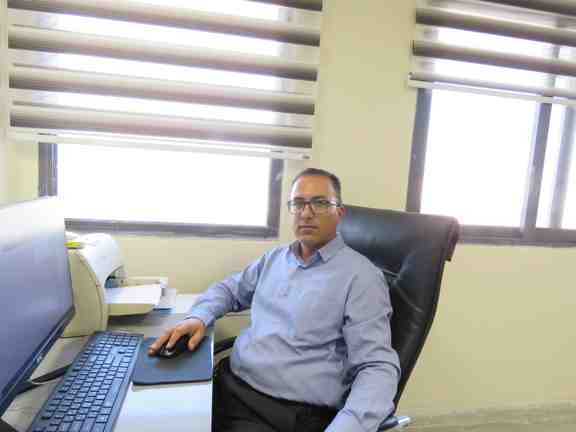
It is with great pride and pleasure that I welcome you to the official page of the Department of Physical Geography—the vibrant heart of environmental studies at the University of Sistan and Baluchestan. Here, we believe that the key to sustainable development lies in a profound understanding of the forces and processes governing our planet. Our academic programs, from the Bachelor’s to the Ph.D. level, are meticulously designed around the two powerful pillars of climatology and geomorphology to transform students into creative researchers and competent experts equipped to solve our nation’s real-world challenges. We are dedicated to fostering a dynamic environment for research, innovation, and advancing the frontiers of knowledge. I invite you to join our academic family, so that together, we can contribute to the shared human endeavor of understanding and protecting our planet, our common heritage.
Sincerely,
Dr. Hamid Nazaripour
Head of the Department of Physical Geography
About the Head of the Department
Dr. Hamid Nazaripour, an Associate Professor and the Head of the Department of Physical Geography, is one of the nation’s leading experts in climatology and environmental studies. He holds B.Sc., M.Sc., and Ph.D. degrees in Geography and Climatology from the University of Sistan and Baluchestan and the University of Isfahan. His extensive research portfolio covers climate change, environmental hazards, water resource modeling, and the application of remote sensing. The depth of his scholarly contributions is evidenced by dozens of articles published in prestigious international and national journals, the supervision of numerous theses on topics such as drought, heatwaves, and hydrological data reconstruction, and the execution of applied research projects. By integrating theoretical knowledge with technical expertise in data analysis, Dr. Nazaripour plays a pivotal role in the scientific and research leadership of the department.
Academic Programs
1. B.Sc. in Geography
This program serves as the gateway to the fascinating world of geographical science. Students are introduced to the fundamentals of both physical and human geography, spatial analysis techniques, cartography, and modern technologies like GIS and RS. The objective of this course is to train well-rounded experts who acquire a solid foundation for entering specialized fields such as planning, land management, environmental studies, and for careers in the nation’s executive and research institutions.
[More Information & Curriculum]
2. M.Sc. in Climatology (Specialization: Environmental Climatology)
This specialization focuses on the analysis of atmospheric systems and their impact on the environment and human activities. Using advanced numerical models, satellite data, and statistical methods, students investigate phenomena such as climate change, air pollution, and drought. Graduates are prepared for careers in meteorological organizations, the Ministry of Energy, the Department of Environment, and climate research centers.
[More Information & Curriculum]
3. M.Sc. in Environmental Hazards
In a world where societies are more exposed than ever to natural and anthropogenic hazards, this program trains specialists in hazard identification, assessment, prediction, and crisis management. By analyzing phenomena such as floods, earthquakes, landslides, and storms, students acquire the necessary skills to reduce risk and enhance community resilience, preparing them for service in crisis management organizations, the Red Crescent, municipalities, and consulting firms.
[More Information & Curriculum]
4. M.Sc. in Geomorphology (Specialization: Geomorphology and Environmental Planning)
This specialization is dedicated to the study of landforms and their dynamic processes, linking this knowledge with the principles of land use planning. Students learn how to select optimal locations for development projects (dams, roads, cities) and sustainably utilize earth’s resources by analyzing the potentials and limitations of the natural environment. Graduates play a key role in the Ministry of Agriculture Jihad, the Ministry of Energy, and engineering consulting firms.
[More Information & Curriculum]
5. Ph.D. in Climatology (Specialization: Environmental Climatology)
This is the highest level of education and research for attaining a deep understanding of the complexities of the Earth’s atmosphere and climate. By conducting fundamental and applied research at the frontiers of science, students address the nation’s major climatic challenges, from long-range forecasting to modeling the impacts of global warming. Graduates will pursue careers as faculty members, senior researchers, and strategic advisors in national and international policy-making centers.
[More Information & Curriculum]
6. Ph.D. in Geomorphology (Specialization: Geomorphology and Environmental Planning)
This program is designed to cultivate researchers capable of theoretical and applied analysis of the interactions between geomorphic processes and human planning. With a focus on sustainable development, land management, and the optimal use of resources, students develop solutions for development in harmony with nature. These specialists are trained to lead major national projects in land use planning, natural resource management, and disaster mitigation.